Mold Removal in Philadelphia, PA
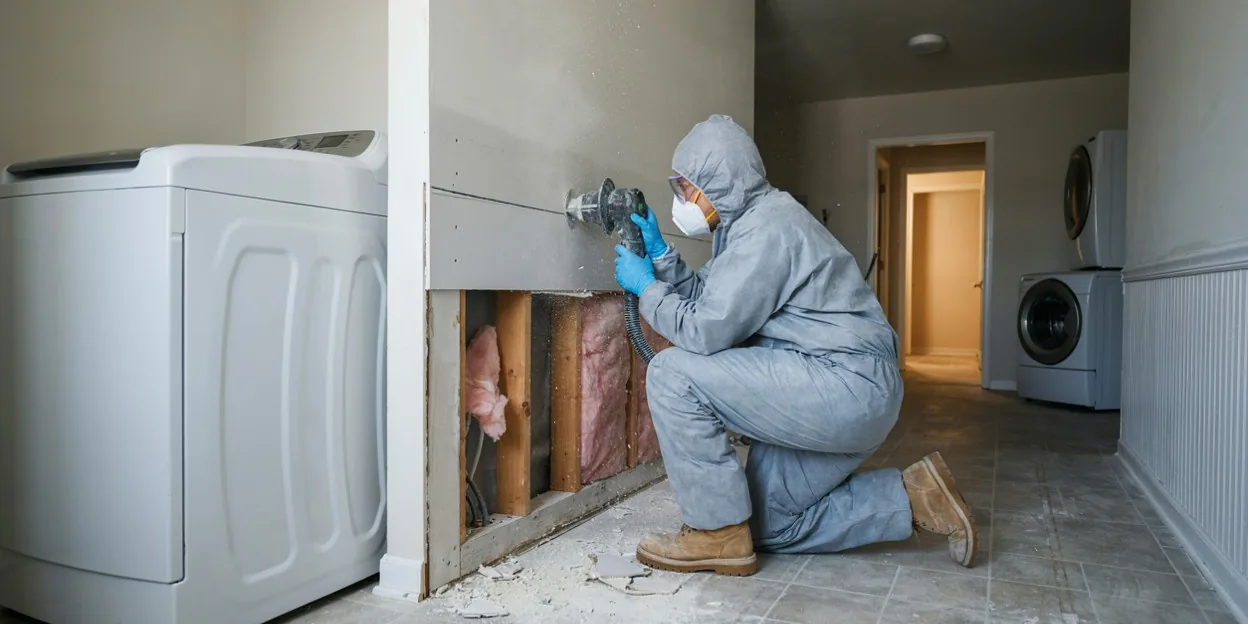
The paneling on the back basement wall of your rowhouse has a dark band along the bottom, and when you pull a sheet away the rubble stone behind it is slick and the furring strips are black. The wall faces the alley, the downspout from the flat roof empties right beside it, and the house was built around 1905. This site connects you by phone with an independent local provider who does mold removal in Philadelphia and across Philadelphia County.
Reading a stone wall before anyone touches it
Nothing comes off until the wall has been metered. A pin meter on the paneling and the furring strips and a non-invasive meter across the stone tell the crew how high the moisture rises and how far along the wall it runs, which in a rowhouse basement is usually the full length of the wall facing the downspout. They mark that line, then check the joist ends sitting in the pockets above it and the party walls on either side.
Then containment goes up. Plastic seals the top of the basement stairs and any doorway to a rear addition, the furnace return grille is taped over, and a HEPA air scrubber is ducted out a cellar window so the basement runs under negative pressure. Dust from pulling paneling off a wet wall stays below.
Move the downspout and leave the heat on
If the downspout from the roof box empties against that wall, put an extension on it today so the water lands six feet out in the alley. Photograph the wall, the paneling, and the floor. Do not tear the rest of the paneling off yourself; a wet sheet sheds spores when it comes down, and without containment they ride the furnace blower upstairs.
Leave the heat or the air conditioning running and keep the basement door closed. Skip the bleach. It wets the paper or the wood face and leaves the growth in the material behind it. If the wet wall is a party wall rather than the alley wall, knock on the neighbor's door and ask about their roof and their bathroom, because the water may be theirs.
Paneling and furring out, stone and joists stay
Paneling, furring strips, any drywall or insulation, and the bottom plate of a framed wall come out to a set distance above the meter line and go into bags inside the containment. The stone, the brick, and the joists stay if they read dry after cleaning. A joist end that has sat in a wet pocket for years is sometimes punky, and the crew tells you that before they do anything about it.
After the demolition every surface in the containment gets HEPA vacuumed and wiped down. Air movers and a dehumidifier run until the stone and the joists read dry, which on a wall that has been wet for a season can take the better part of a week. When the furnace cabinet or the ducts have growth in them too, HVAC mold cleaning joins the job. If it is on the rafters under the roof, see attic mold remediation. If several floors are involved, the job becomes whole-home mold remediation. Rebuilding that wall is mold damage repair.
Rubble foundations, one downspout, and the L&I permit desk
Rowhouses from South Philadelphia to Fishtown to West Philadelphia were built from the 1880s through the 1920s on rubble-stone or early brick foundations with no waterproofing, and the flat roof above drains to a single box. When that box clogs, the roof ponds and the overflow runs down the back wall and into the ground beside the foundation. The 1950s twins in the Northeast have poured or block foundations and shallow basements, but share a gutter line with the house next door, and a clogged shared gutter does the same thing.
Pennsylvania has no mold license. Removal is a trade the provider represents its own training in; replacing paneling, drywall, or framing is home improvement work under the state's contractor registration law, and a rebuild that touches plumbing, electrical, or structure needs a permit from the Department of Licenses and Inspections, or from the township if the house is in Upper Darby, Cheltenham, or Bensalem. Most Pennsylvania homeowner policies pay for a sudden pipe break and exclude seepage, so tell your adjuster the date you first saw the water.
Calling about a wet basement wall in a Philadelphia rowhouse
Have the address, which wall is wet and what is on it, and how long it has looked like this. Say whether the downspout empties beside that wall, whether the basement has ever taken sewer water, and whether anyone has painted or paneled over the spot. Call (215) 600-0376.