Whole-Home Mold Remediation in Philadelphia, PA
The storm put two feet of sewer water in the basement, you pumped it out the next morning, and three weeks later the basement, the first-floor powder room, and the kitchen floor all smell the same. Or the house was vacant for the winter, the roof box froze and split, and the water ran down the inside of the party wall from the top floor to the cellar. Either way the growth is not in one room anymore. This site connects you by phone with an independent local provider who does whole-home mold remediation in Philadelphia and across Philadelphia County.
Mapping three floors before the first bag is filled
A rowhouse is narrow and tall, so water travels vertically. The crew starts at the top of the problem and meters down: every wall, floor, and ceiling along the path, plus the party walls on both sides, because the water that ran down your side of the brick usually wet the neighbor's side too. They write a plan that divides the house into zones and sets the order, so you know which rooms are sealed on which days.
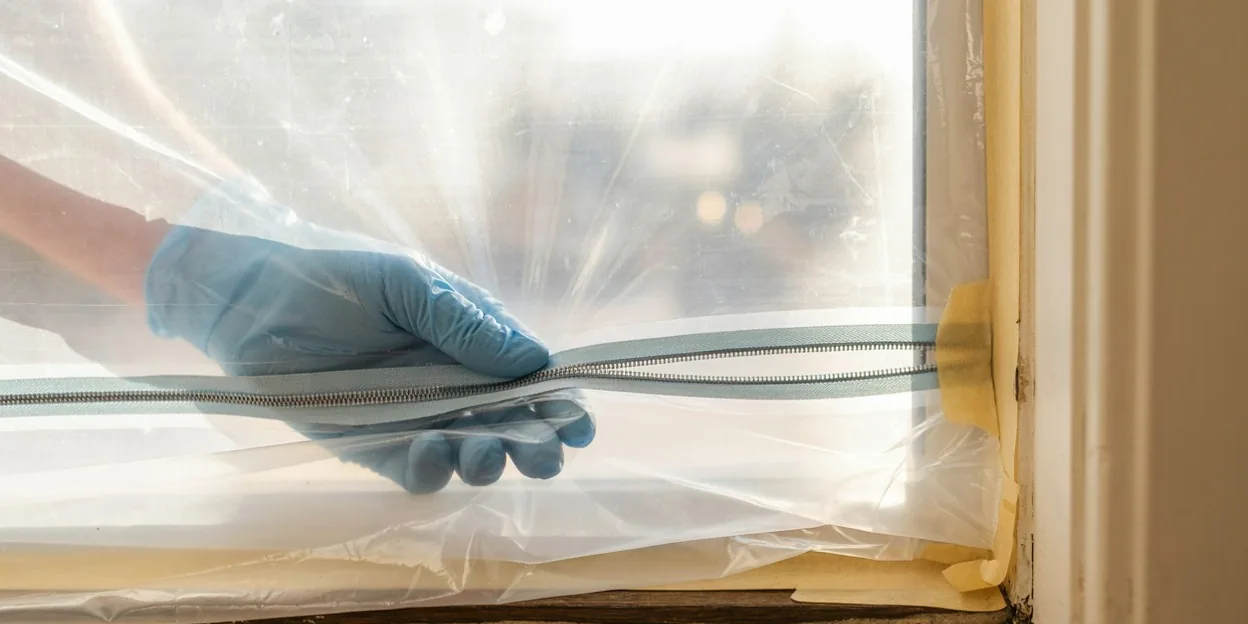
Containment for a whole-house job is heavier than for one room. Each zone gets its own plastic walls, the furnace or air handler is shut down and its grilles sealed, and one or more HEPA air scrubbers run so each zone sits under negative pressure. On a sewer-water job the crew works in protective gear and treats everything the water touched as contaminated.
Shut the water, kill the breaker, and stop pumping into the floor drain
If a pipe or the roof is still feeding the problem, stop it: shut the main, tarp the roof, or have a roofer clear the box. If the basement took sewer water, do not run the furnace or the water heater until an electrician or the gas company has looked at them. Stop using the basement floor drain for anything until the backup is understood; the Philadelphia Water Department's Basement Protection Program can install a backwater valve on the lateral afterward.
Photograph every room, mark the high-water line on the wall with tape, and keep the receipts for the pump, the fans, and anything you threw out. Do not carry wet drywall or carpet up through the clean floors; bag it where it is or leave it for the crew.
What leaves the house and what stays
Drywall, plaster, paneling, insulation, carpet, carpet pad, and particle-board cabinets that got wet come out, zone by zone, bagged inside the containment and carried out on a protected path. On a sewer-water job, anything porous the water touched comes out regardless of whether it reads dry today. Framing, brick, stone, and solid-wood subfloor stay if they clean up and read dry; a section that does not gets cut back and the crew tells you first.
Every zone is HEPA vacuumed and wiped down, then dried with air movers and dehumidifiers until the framing and masonry read dry. If the furnace or ducts ran during the flood or the leak, HVAC mold cleaning is part of the job. If the roof framing is involved, so is attic mold remediation. Putting three floors back together is mold damage repair, and the provider tells you before demolition whether they handle that phase or stop at clean and dry.
Ida, combined sewers, and the Philadelphia houses that take water from both ends
On the night of September 1, 2021, the remnants of Hurricane Ida flooded Manayunk's Main Street, Kelly Drive in East Falls, and the Vine Street Expressway, and the Schuylkill crested above 16 feet at the Philadelphia gauge, its highest since 1869. Basements that had been dry for decades took water that night, some from the river and the creeks, more from the combined sewers that carry stormwater and sewage in one pipe under most of the older city and back up through floor drains when the street main is full. Germantown, Northern Liberties, South Philadelphia, and Port Richmond see the most of it.
Pennsylvania has no mold license; the provider represents its own training on the removal, and the repair side is home improvement work the contractor registers with the Attorney General to do. Rebuilding plumbing, electrical, or structure needs a permit from the Department of Licenses and Inspections inside the city, or from the township or borough just over the line. Most Pennsylvania homeowner policies exclude groundwater and cover sewer backup only through an endorsement, so find your declarations page before the adjuster calls.
Calling about a house that is wet on every floor
Have the address, how many floors are affected, and what caused it: sewer water, a river or creek, a roof, or a pipe. Say whether the house is occupied and whether the furnace has run since the water came in. Call (215) 600-0376.